Railway Sector
Tecnocons designs, develops and integrates electronic, control and automation systems for the railway sector. The work covers the whole cycle — requirements analysis, electrical and electronic design, software development, on-board integration, testing and support for type approval — on locomotives, on-track machines, motor trolleys and infrastructure maintenance machinery.
The three families of systems:
- On-board control and automation — Systems that govern the vehicle: from automatic guidance of the tamping machine to distributed control of traction, braking and auxiliary systems, through to the driver's desks and operator interfaces.
- Safety, data and platforms — Systems for the safety of those working on the line, for protected recording of driving data and for the analysis of operating data collected from the fleet.
- Electric traction — Complete traction chain: motor, power electronics, energy storage, charging and vehicle control. Modular configurations from 100 kW to over 1 MW, for new builds and for the conversion of existing vehicles.
- Custom systems: boards and cabinets designed to the vehicle specification, control software and HMI developed in-house
- Vehicle upgrades to the RFI roadmap
All systems include telemetry, remote diagnostics and remote software updating, with traceability on a cloud platform. On this basis, machine vision and machine learning models are applied to obstacle detection, predictive diagnostics and maintenance planning from operating data.
System architecture
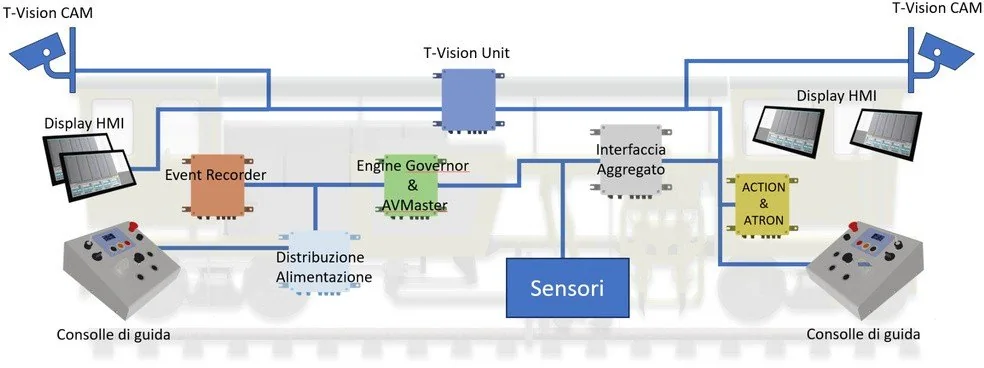
The on-board architecture is organised around the TCMS, which collects the distributed I/O, governs traction, braking and auxiliary systems and brings diagnostics to the driver's desks.
The specialised systems connect to its buses: Engine Governor towards the power unit, T-Vision for obstacle detection, EVREC 2.0 for protected recording of driving data, ACTION and ATRON on infrastructure maintenance machines.
On the ground, SyRail collects the track geometry surveys and Syfleet the fleet telemetry. Each subsystem can be installed on its own on an existing vehicle, or as part of a complete architecture on a new build.
Our Products
Discover our complete range of railway solutions designed to improve safety, efficiency, and reliability.
On-board control and automation
Systems that govern the vehicle: from automatic guidance of the tamping machine to distributed control of traction, braking and auxiliary systems, through to the driver's desks and operator interfaces.
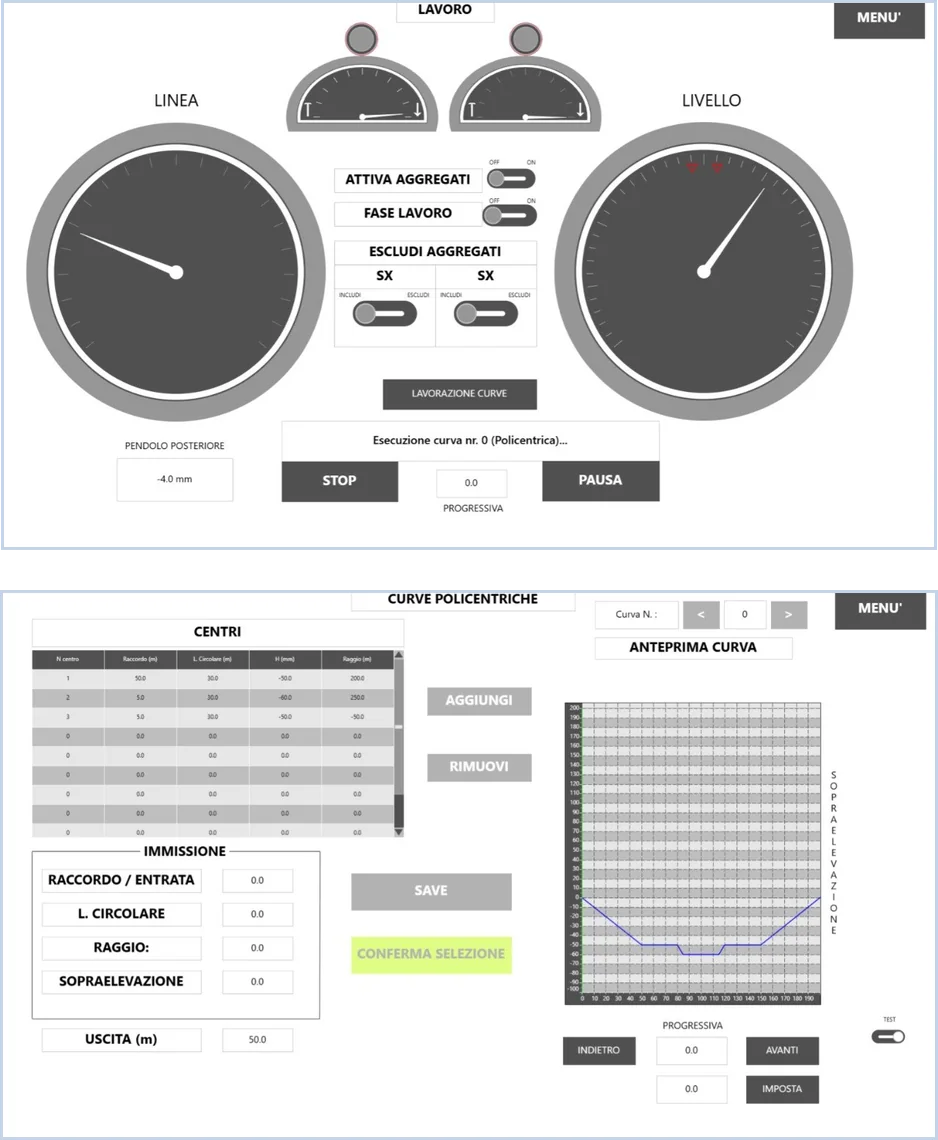
ACTION — Automatic guidance and control of the tamping machine
ACTION receives the theoretical design geometry and automatically drives the tamping machine during work. It translates the data into commands for the hydraulic and pneumatic units and governs tamping forces,.
- Industrial CPU with real-time operating system for deterministic control
- Alignment data handling: manual entry, USB stick or download from SyRail
- Automatic parameter control with adaptive self-learning
- Interface to all the hydraulic and pneumatic systems of the machine
- Geometry reporting in PDF to EN 13848
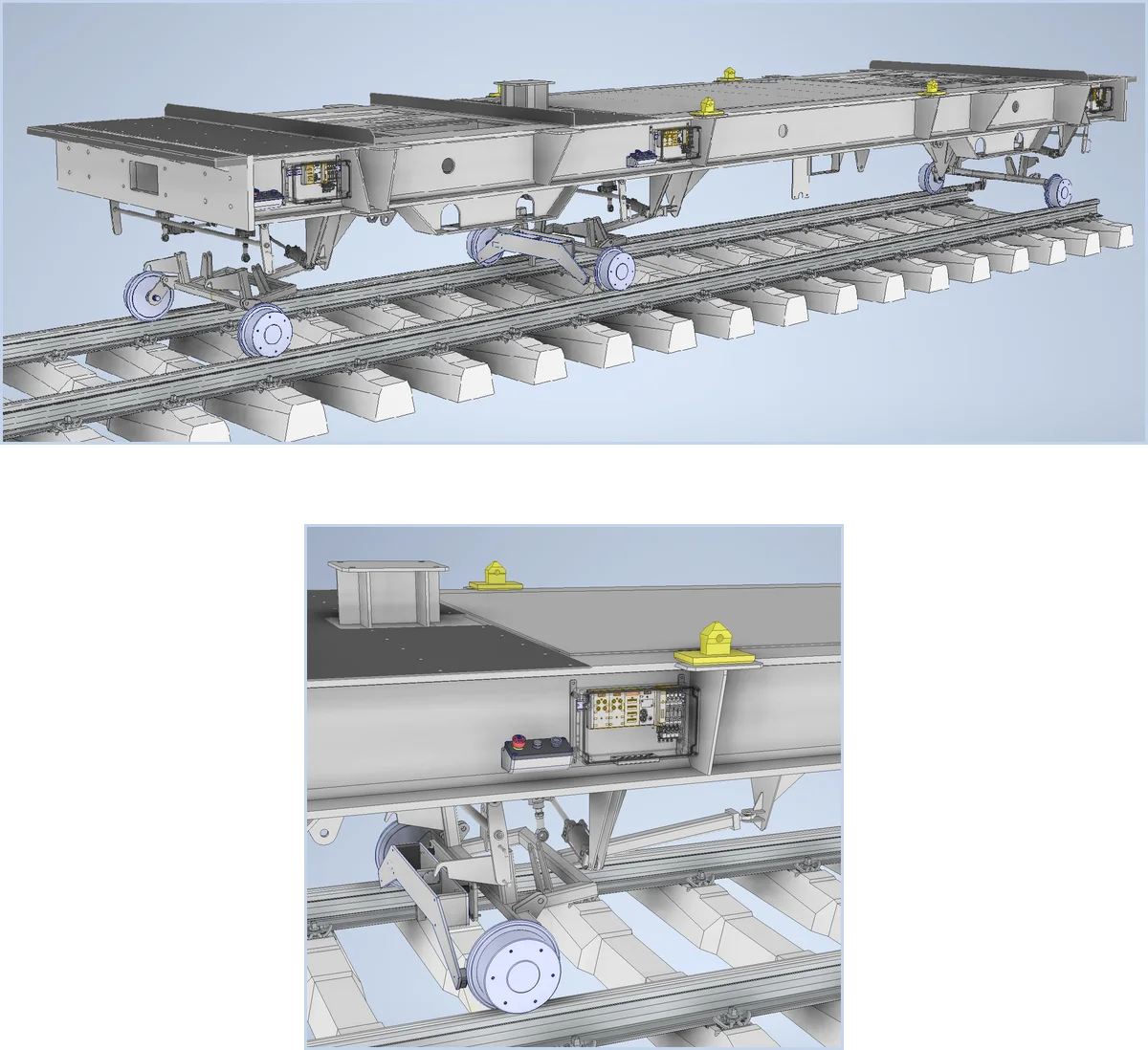
ATRON — Track geometry by the versine (chord) method, to EN 13848
ATRON acquires track geometry by the versine method defined in the standard. Three independent measuring trolleys run on the rails at the front, centre and rear of the wagon: the chord between the leading and.
- Versine method to EN 13848, on three measuring trolleys
- Laser sensors and magnetostrictive transducer, with no wearing parts
- Sampling every 0.5 m with GPS position
- Filtering in wavelength ranges D1 (3–25 m) and D2 (25–70 m)
- Before and after maintenance comparison, event marking along the alignment
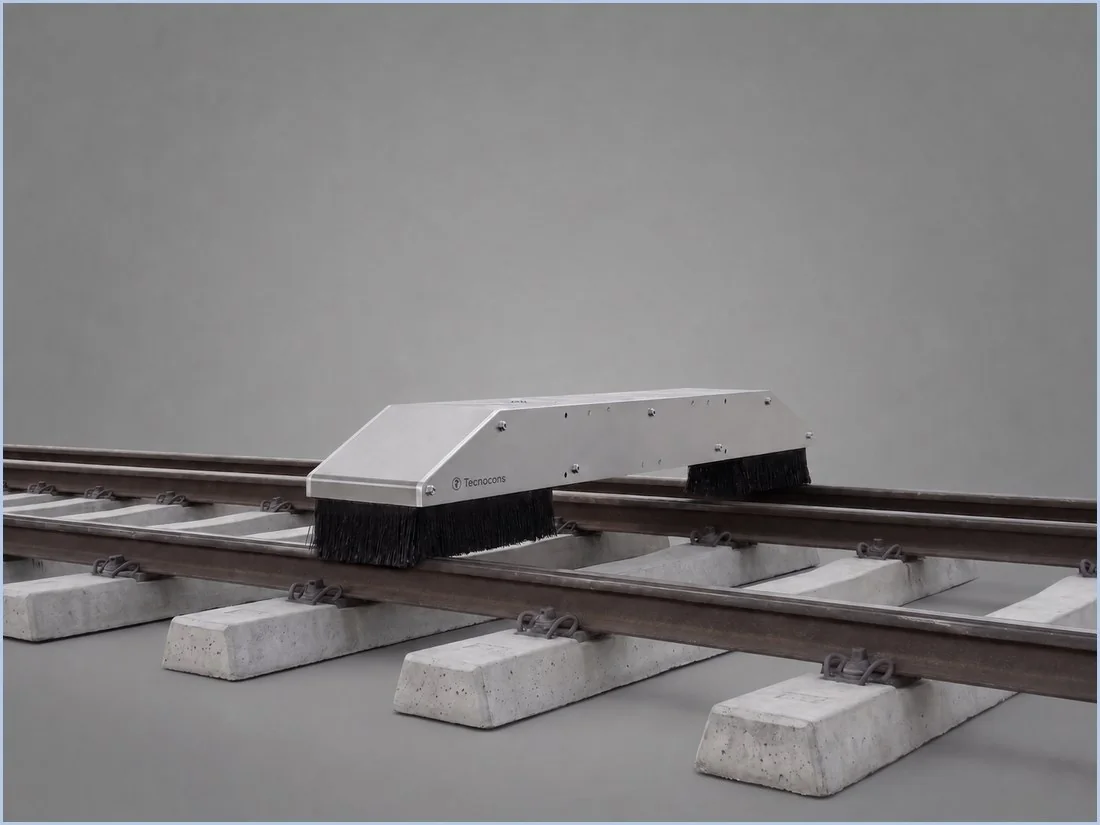
ATRON V3 — Optical-inertial measurement on the move, without trolleys and without contact
ATRON V3 measures on the move, without trolleys and without any contact with the track: it acquires track geometry and rail wear together, combining laser scanners, a high-precision inertial platform and GNSS.
- No measuring trolleys: the unit mounts directly on the vehicle
- Non-contact measurement of track geometry and rail wear
- Laser scanners and high-precision inertial platform (IMU)
- GNSS georeferencing of every survey
- EN 13848 processing with reporting on AL / IL / IAL thresholds
TCMS — Train Control & Management System — distributed on-board control
The TCMS is the central node of the vehicle: it collects the distributed I/O, governs traction, braking, lighting and auxiliary systems and brings all information to the driver's desks. It runs on a Linux platform.
- Diverse dual CPU 2oo2D, SIL 2 to EN 50129
- SIL 4 driver's safety device (DSD/vigilance) with dedicated safety relay, pedal and pushbutton
- System buses: EtherCAT ring with FSoE, Ethernet, CAN J1939, RS485
- Event recorder and PMU integrated in the platform
- MQTT telemetry to Syfleet, OpenVPN remote access over 4G/LTE and Wi-Fi
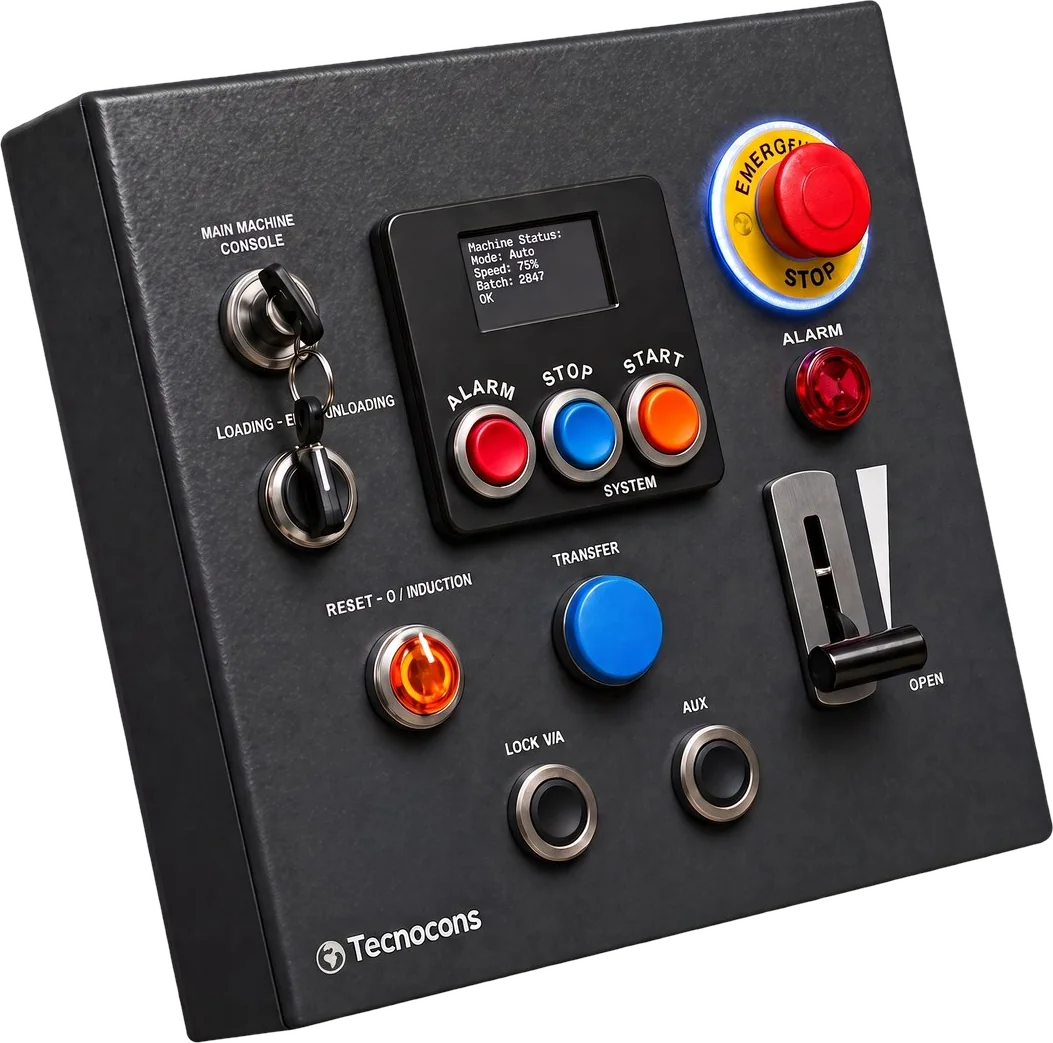
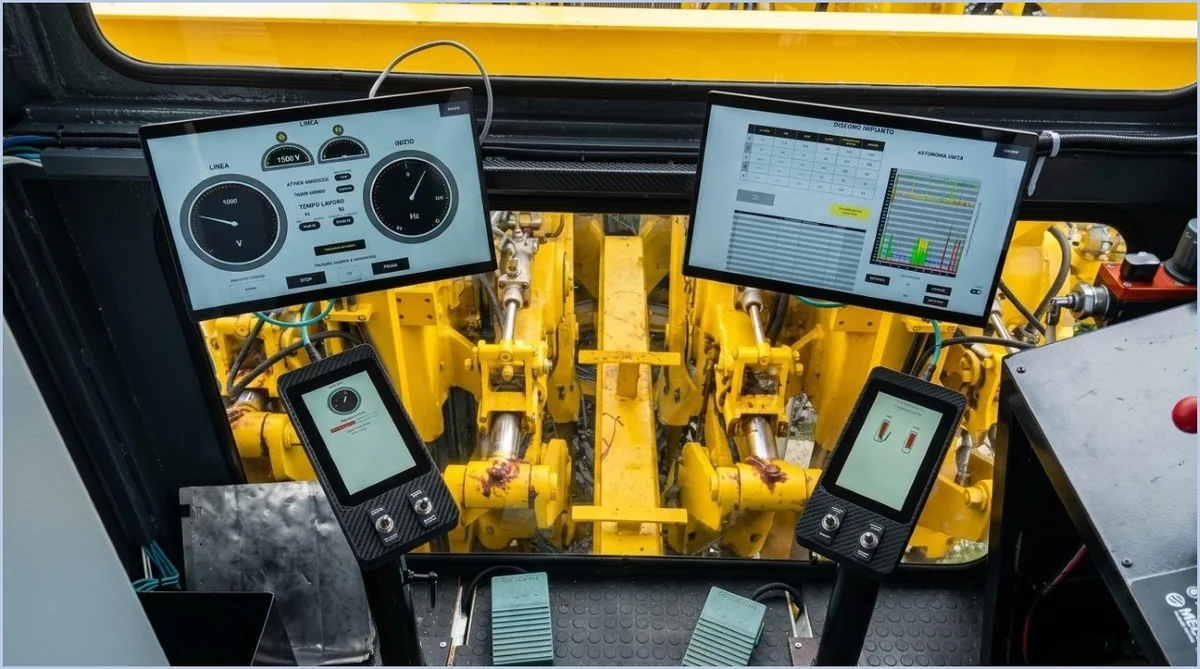
CONSOLE — Driver's desks and HMI interfaces built around the vehicle layout
The desks are built around the layout and ergonomics of the individual vehicle: steel structure, physical controls certified for heavy duty and high-brightness industrial touch displays, running the same interface.
- High-brightness industrial touch screen display
- Pushbuttons and joysticks certified for heavy duty
- Impact-resistant steel structure, IP66 protection rating
- Certified safety functions SIL 2 / CAT 4
- Integrated industrial PLC with on-board diagnostics
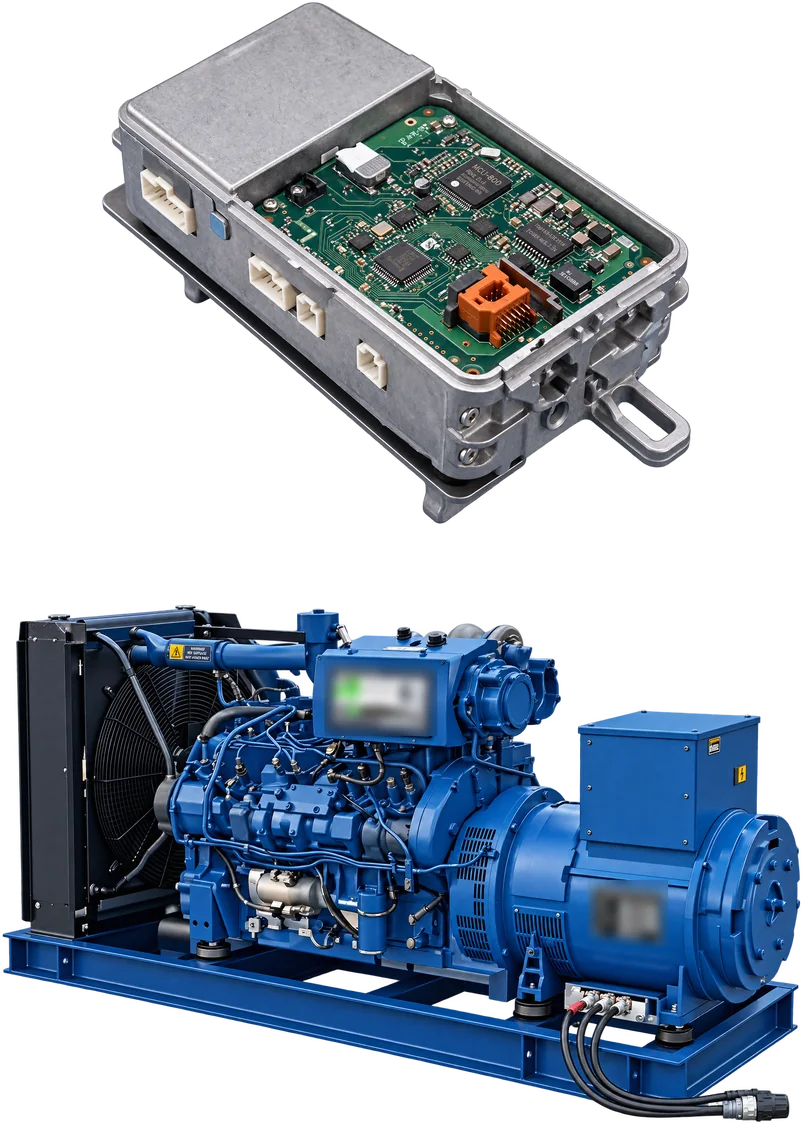
ENGINE GOVERNOR — Universal interface between the vehicle control system and the power unit
Engine Governor sits between the vehicle control system and the engine unit, translating the operating demands of the vehicle into commands for the engine controller. It communicates over CAN J1939 with modern ECUs.
- CAN J1939 interface for advanced engine diagnostics
- Analogue and digital inputs and outputs for older-generation engines
- Automatic optimisation of speed and torque according to load
- Electronic management of injection and torque curves
- Documented fuel saving of 15–20%
Safety, data and platforms
Systems for the safety of those working on the line, for protected recording of driving data and for the analysis of operating data collected from the fleet.
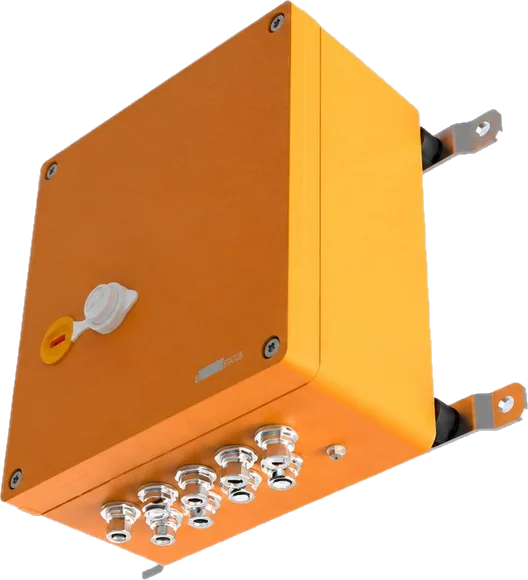
EVREC 2.0 — Event recorder to EN/IEC 62625-1, with crashworthy protected memory
EVREC 2.0 continuously records time, date, speed, position, driver commands and safety actions, storing them in a tamper-proof protected memory unit. Three simultaneous recordings at 1 Hz and checksums guarantee.
- Tamper-proof crashworthy PMU (Protected Memory Unit)
- At least 720 hours of continuous recording
- Multi-constellation GNSS with ±1 ms time accuracy
- Three simultaneous recordings at 1 Hz, data protected by checksum
- Backup battery for 10 minutes after an emergency
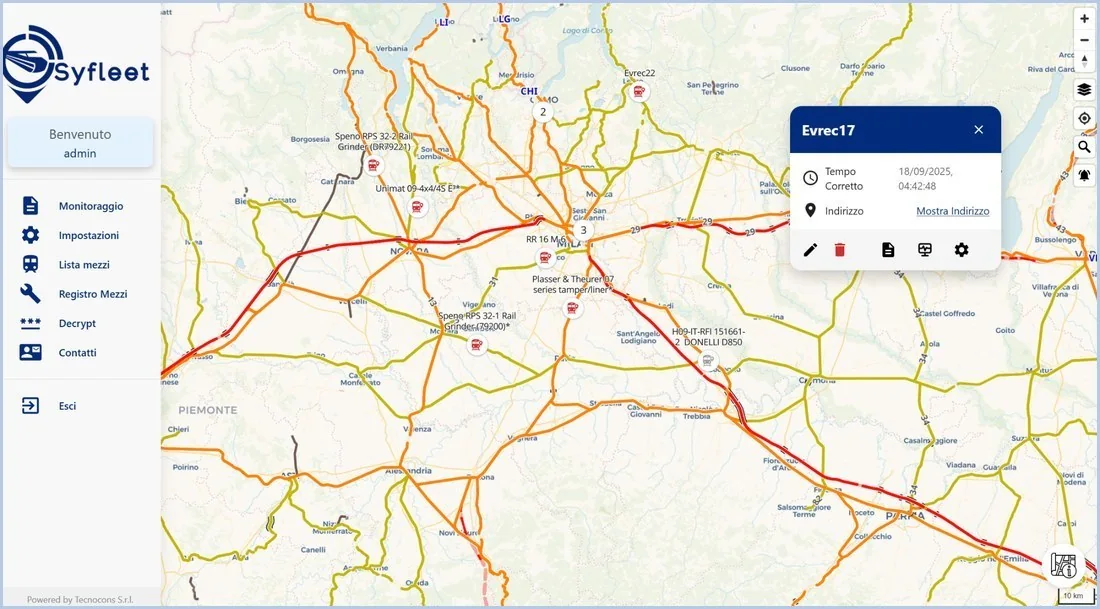
SYFLEET — Fleet management and predictive maintenance with artificial intelligence
Syfleet acquires vehicle telemetry and turns it into an operating picture: position and performance in real time, consumption in litres per kilometre and per engine hour, running hours per unit. On historical data.
- Live map with vehicle position and performance
- Per-vehicle dashboards: usage, consumption and critical parameters
- Preventive and predictive maintenance with machine learning models
- Automatic alerting and maintenance log
- Planning on actual kilometres and hours
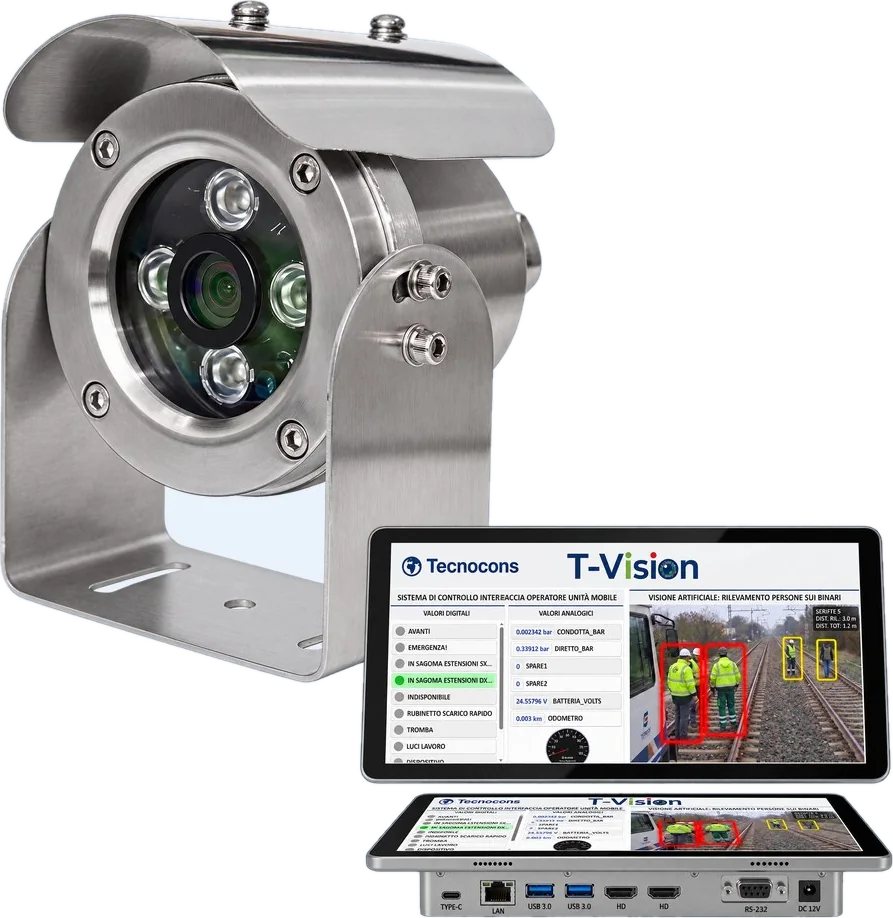
T-VISION — Machine vision for the detection of people, vehicles and obstacles
Two HD cameras cover the line ahead of and behind the vehicle. The processing unit recognises people, vehicles and obstacles on the route in real time and returns the images to the operator's desks. As the distance.
- On-board AI processing on NVIDIA Jetson Orin Nano
- 2 HD 1920×1080 cameras front and rear, expandable, PoE powered
- Detection of obstacles, people and vehicles; signal recognition
- Live image display on the operator's monitors
- Progressive visual and audible alarms according to distance
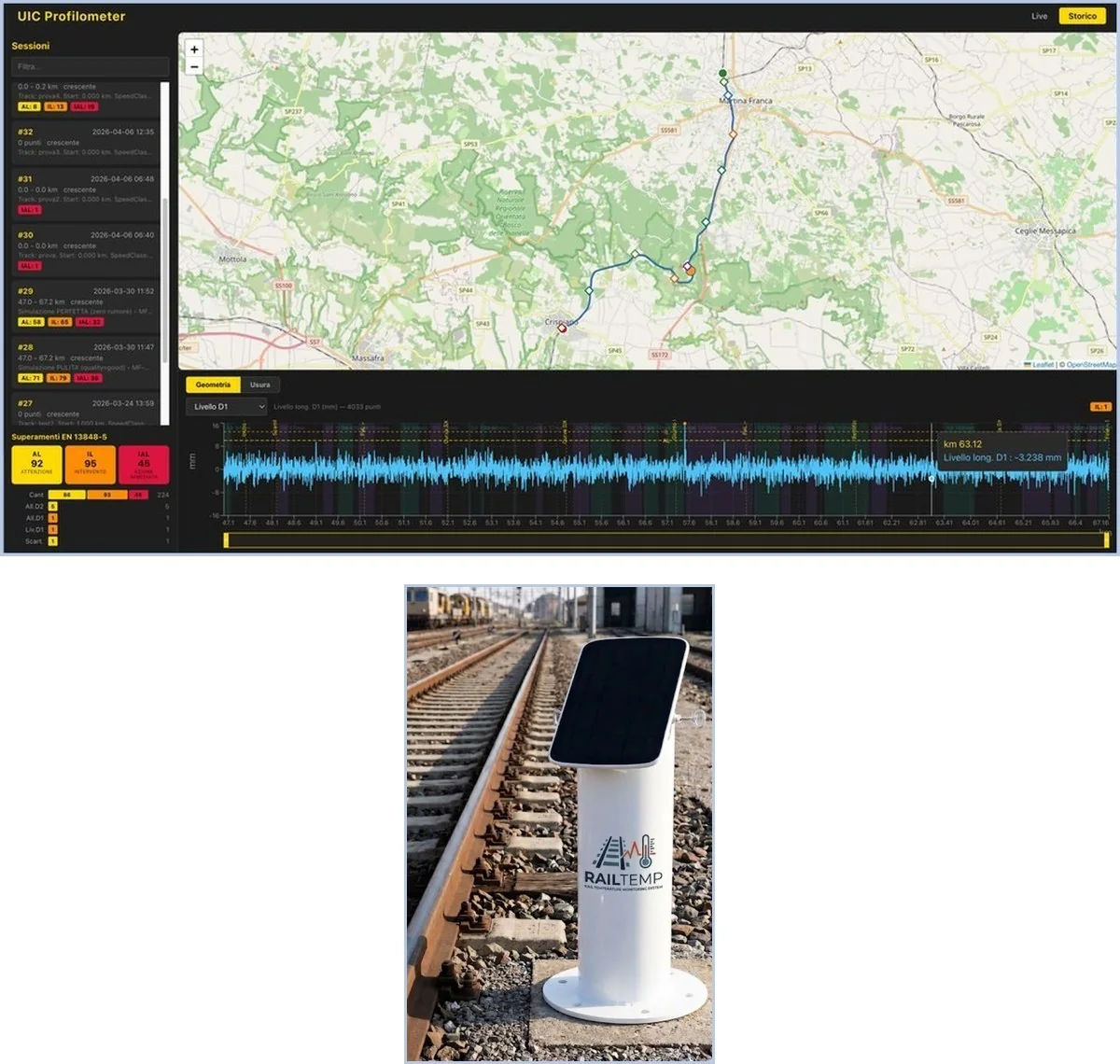
SYRAIL — Web platform for track geometry data and lineside monitoring
SyRail collects the surveys produced by the on-board measuring systems and makes them available from any workstation: interactive maps, track condition section by section, history of measurement runs and download of.
- Interactive maps with the georeferenced position of every survey
- Track condition by section, with threshold exceedances highlighted
- History of measurement runs and comparison between successive surveys
- Download of recordings and reports in PDF
- Browser access, with no installation on user workstations
Electric traction
Complete traction chain: motor, power electronics, energy storage, charging and vehicle control. Modular configurations from 100 kW to over 1 MW, for new builds and for the conversion of existing vehicles.
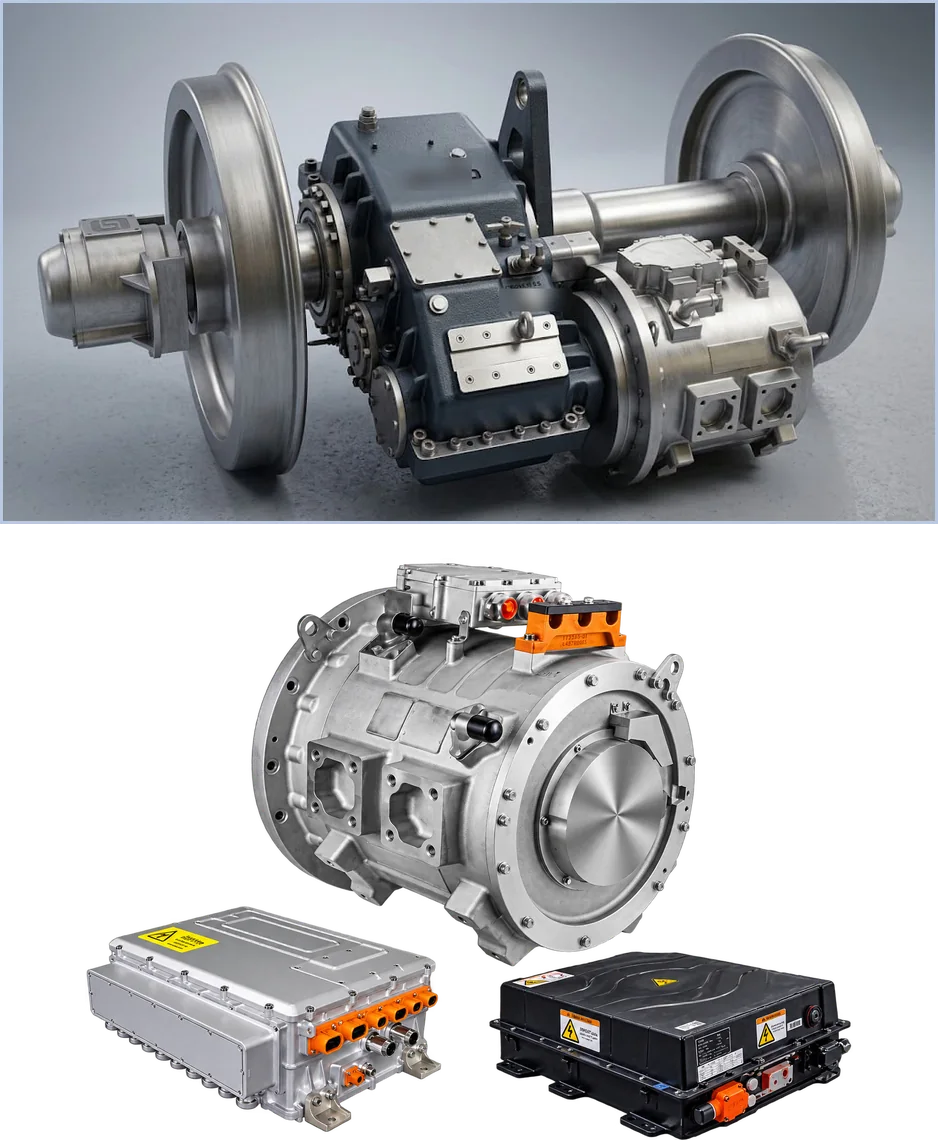
ELECTRIC POWERTRAIN — Electric and hybrid traction from 100 kW to over 1 MW
The traction chain is designed and integrated as a whole: motor, inverter, batteries, charging systems and vehicle control unit. Configurations are modular and are sized on the mission profile of the vehicle, from.
- Brushless permanent-magnet synchronous motors with high torque density
- Traction controllers with integrated inverters and regenerative braking
- Modular LiFePO4 batteries to EN 62928, expandable packs
- Predictive BMS monitoring cell voltage, temperature and state of health
- AC charging, DC fast charging and genset range extender
Railway product catalogue
30 pages: on-board control and automation, safety and data platforms, electric traction.
Railway product catalogue
30 pages: on-board control and automation, safety and data platforms, electric traction.
PDF · 30 pages · 3.4 MB